Building products that actually matter.

I’m a data driven product leader with three successful startup exits across multiple industries. I have deep experience in healthcare spanning payer, provider, patient, and pharma. I turn complex clinical and operational problems into elegant, scalable solutions.

Where I Thrive

Healthtech AI/ML Products Data Products 01 Launches Platform Products Enterprise B2B B2B2C Healthcare Interoperability
Jess Poeske

Jess Poeske

Product Management

Pittsburgh, PA

15
Years building products across startups and enterprises
10+
Years in healthcare product development
3
Startup exits (including one $1B+ valuation)
01
Full lifecycle launches from concept to commercial scale
Download CV

A career spent building products across industries.

From early-stage startups to scaled enterprise platforms, each experience sharpened how I approach ambiguity, complexity, and user-centered decision making.

Healthtech
Payer, provider & pharma products; clinical data platforms; SDoH, care coordination & navigation
AI/ML Products
AI-powered product strategy; rapid prototyping; LLM integration & human-centered AI design
Smart Devices
IoT-enabled medical and operational hardware products
Transportation Logistics
Final mile, LTL, fleet management & dispatch optimization
Mobile Messaging
Scaled telecom messaging, alerts, and secure communication
Fin-Tech
Share of wallet insghts, copertive financial census; 340B drug pricing compliance

How I Work

Process-driven, iterative product management.

A framework-driven approach spanning the full product lifecycle, from how I build and ship features, to how I prioritize, plan roadmaps, and bring products to market.

Product Development Lifecycle

I start with data to uncover real problems, move quickly through validation and delivery, and continuously loop learnings back into the system.
Click any step to explore.

01
Ideate
Product
02
Evaluate
Product
03
Prototype
Product + UX
04
Build
Eng + QA
05
Beta
Eng + Product
06
GA Release
Eng + Product
07
Track
Product
Goal
Generate ideas from: market direction, sales gaps, company strategy, user feedback, executive sponsor input, usage metrics, and cross-functional workshops.
→ Key Outcome: List of raw features with potential benefit
Goal
Discovery and research with internal and external stakeholders to understand use case, revenue potential, ROI, users, and the core problem being solved.
→ Key Outcome: Prioritized roadmap, defined features with KPIs/goals, high-level acceptance criteria, and scope
Goal
Carry out user testing and elicit feedback with anything from high-level wireframes to fully clickable prototypes with GenAI or manually in Figma, Balsamiq, PowerPoint, etc.
→ Key Outcome: Updated features, roadmap, and KPIs based on testing and feedback
Goal
Feature development, QA, UAT, and iterative updates based on QA and UAT findings. Engineering and QA own delivery quality.
→ Key Outcome: Technical readiness for a beta or GA feature release
Goal
Establish beta release scope, target users, KPIs, and goals. Deploy beta release and actively track performance against targets.
→ Key Outcome: Insights, fixes, and improved readiness for broader GA release
Goal
Define and execute release readiness plans including training, communications, sales impact, demos, marketing materials, support plans, and knowledge base articles.
→ Key Outcome: Deploy GA release with all supporting materials and plans delivered
Goal
Track the feature's main goals and KPIs to see if it's performing as expected, and diagnose why or why not with data and user feedback.
→ Key Outcome: Establish fixes or feature improvements based on feedback and analytics - feeding back into Ideate

Prioritization Frameworks

There are LOTS of great frameworks — but there isn't a one-size-fits-all framework. The right choice depends on product maturity, scale, business type, and the specific context you're operating in. And no framework is a silver bullet that will solve every problem!

PRICE: An adapted framework PRICE

The PRICE framework is my adaptation of Intercom's RICE framework, modified to better fit enterprise and B2B products. This is how I adapt frameworks to the business context rather than applying them blindly.

PRICE Formula

(P × R × I × C) ÷ E

P

Potential — How potentially repeatable is this feature/use case for other customers?

Massive = 3  ·  High = 2  ·  Medium = 1  ·  Low = 0.5  ·  Minimal = 0.25

R

Revenue — How large of an annual revenue/value generator is this?

Massive = 9–10  ·  High = 7–8  ·  Medium = 5–6  ·  Low = 3–4  ·  Minimal = 1–2

I

Impact — How much will this impact each person?

Massive = 3  ·  High = 2  ·  Medium = 1  ·  Low = 0.5  ·  Minimal = 0.25

C

Confidence — How confident are you in your estimates?

High = 100%  ·  Medium = 80%  ·  Low = 50%

E

Effort — How many person-months will this take?

Use whole numbers; minimum 0.5 months

Sample PRICE Scoring

FeatureFeat. P R I C E ScoreS
Centralized HIPAA LoggingHIPAA Logging33390%124.3
Governor 2.0Governor 2.026290%121.6
Data Quality EnforcementData Quality34290%121.6
Multi-layer PDF SupportPDF Support26280%119.2
Auto-detect Scanned ContentScanned Content26280%119.2
API Performance ImprovementsAPI Performance37370%314.7

Roadmap Execution

A sample roadmap snapshot from Alexandria Charts (now Ahavi™), organized into thematic waves that balance customer value, security, and engineering health.

Now
"Under-the-Hood" Quality
Q3 2022
  • Bulk Extraction 2.0
  • Clearsense implementation
  • Text extraction + conversion improvements
  • Enforce data quality proactively
  • Auto-detect scanned content
  • Native multi-layer PDF support ✱
  • HIPAA breach testing
Next
Data Access + Security
Q4 2022
  • Governor 2.0
  • Expand OAuth support + consistency
  • Deprecate Basic Auth/HMAC
  • Centralized HIPAA logging
  • OAuth scope consistency (Indexing)
  • Azure AD migration
  • Images migration
Later
Customer Controls
H1 2023+
  • Improved API consumer controls
  • SLA dashboards
  • Audit Tool 1.0
  • API performance improvements
  • Indexing improvements
  • Disaster Recovery testing
  • AWS WAF to IRT and OpUI

✱ Stretch goal

Go-to-Market & Product Storytelling

I believe go-to-market is fundamentally an exercise in storytelling. The most successful products don't lead with features. They tell a clear story about a real customer problem, the transformation the product enables, and the role the product plays in helping customers succeed.

Turning Product Strategy Market Narrative

My approach to product launches follows a simple storytelling loop - each stage informs the next, and the loop never closes:

1

Start With the Human Problem

Jobs To Be Done

Products succeed when they solve a meaningful problem for a clearly defined user. Discovery and research uncover the real job customers are trying to accomplish and the constraints that prevent them from succeeding today.

2

Clarify the Value Proposition

Value Proposition Design

Translate the problem into a clear explanation of how the product creates value. Effective storytelling connects the user's pain with the product's capabilities and outcomes.

3

Make the Customer the Hero

Hero's Journey

In strong narratives the hero is never the company or the product. The hero is the customer. The product acts as the guide that helps them overcome challenges and achieve their goals.

4

Align the Story Everywhere

Strategic Narrative

The most effective product launches align product, marketing, and sales around a shared narrative. A single story carried consistently across teams makes the product easier to understand and easier to adopt.

The
Loop

Launch Storytelling

At most companies, I partner closely with sales and marketing to bring products to market. Alexandria Charts was different. As the sole business owner, I developed and carried the launch narrative myself.

The platform enabled AI and LLM driven healthcare applications, but the story focused on the outcome: unlocking unstructured clinical data for healthtech teams.

I built the launch narrative and materials from scratch, including the website, pitch deck, one pagers, social content, and early brand identity, working with a contracted designer for visual execution. I also built the early sales pipeline, pitched prospects directly, and represented the product at conferences and with early partners. As I pitched, I honed the story to land better every time.

Case Studies

A selection of product work spanning 01 commercial launches, clinical AI strategy, and market strategy. These reflect the full breadth of my product leadership.

Commercializing UPMC's Clinical Data into an AI-First Platform

ProblemCommercialize UPMC intellectual property into a standalone healthcare AI company

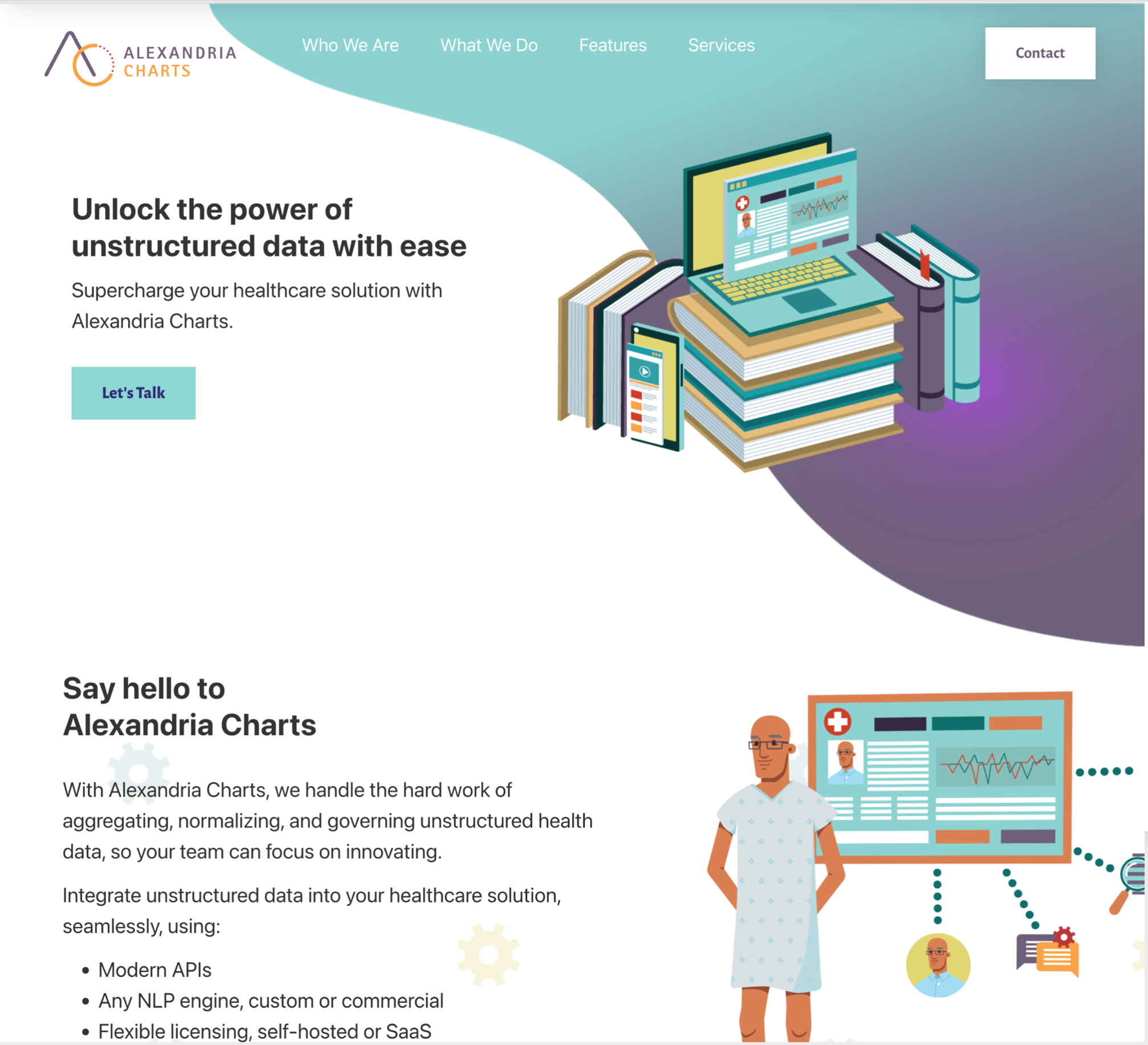
Alexandria Charts (now Ahavi™) is a foundational case study that demonstrates how I build products from 01. I commercialized UPMC's decade-long investment in unstructured clinical data into a platform purpose-built for AI, ML, GenAI, and LLM development in healthcare - spanning strategy, discovery, execution, and go-to-market.

View the Full Case Study
  • Create: Mission + Value PropositionTeams building AI, ML, GenAI, LLMs, and SLMs for healthcare get a robust data platform and APIs to unlock the 50–80% of patient data trapped in unstructured clinical notes - without building the data infrastructure themselves.
  • Identify: Target MarketEarly to mid-stage healthtech companies solving problems with AI, ML, NLP, and unstructured data. Not health systems directly.
  • Build: Business Model + Market Sizing$375B combined TAM in 2030 across AI/ML/NLP and data analytics segments.
  • Generate: Business Plan + BrandBuilt independent business plan, brand identity, and go-to-market assets from scratch.

Business Impact

10–13x ROI delivered to license holders
$150M+ Customer value driven through the platform
$2M+ New revenue secured in 2023

Why use Alexandria Charts

The Alexandria Charts team has put 10+ years of development into a purpose-built data platform for healthcare AI. Whether you're training LLMs, fine-tuning SLMs, building GenAI applications, or developing traditional ML models - Alexandria Charts gives your team clean, governed clinical data without the infrastructure cost.

What the platform does

  1. AggregatePull and consolidate unstructured clinical notes from multiple source systems
  2. NormalizeStandardize and reconcile patient identities across disparate data sources
  3. GovernControl, audit, and enforce data access policies via OAuth and HIPAA-compliant logging
  4. EnhanceEnrich data with OCR, NLP, and Generative AI - powering downstream LLM training, SLM fine-tuning, and ML model development

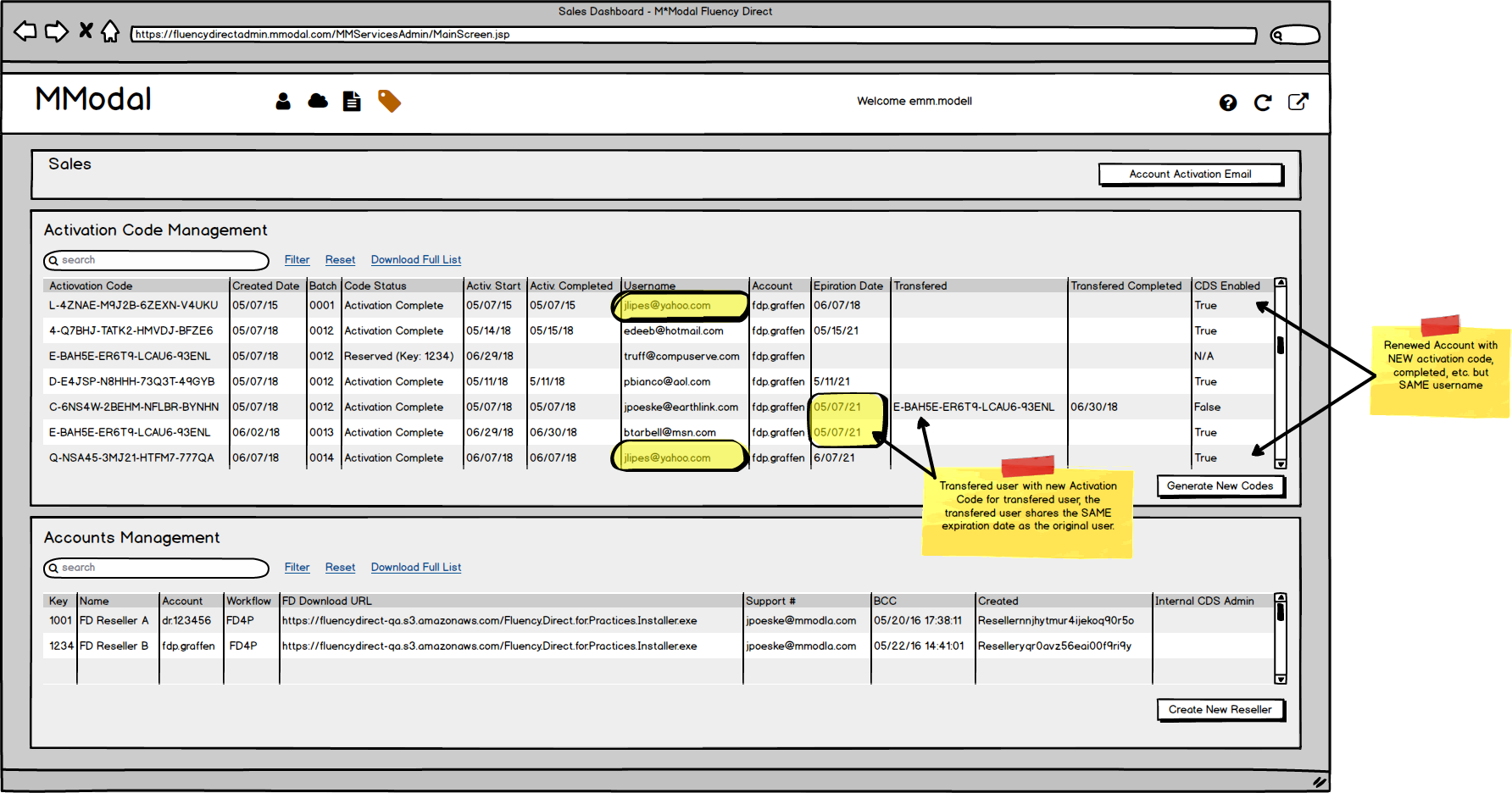
Nursing AI Virtual Assistant Strategy

ProblemExpand existing clinical documentation products into a new adjacent healthcare market

Nurses spend 2-4 hours per 12-hour shift entering 631-875 data points manually. 85% of nursing documentation is discrete data entry. I identified three AI product tiers to address this burden.

View the Full Case Study
  • Scribe TierAutomatically capture and record assessments in the chart via voice.
  • Agent TierSpeed up assessment capture with templates, surface appropriate nursing care plans, create automated shift summaries.
  • Advisor TierAsk for or navigate to relevant EMR information, create reminders, communicate via secure chat integration, voice-enabled chart entry.

Business Impact

3x TAM expansion by entering the nursing market
85K Active users on the core M*Modal platform
$150M Annual revenue of the existing platform

Strategic Recommendations

Three investment paths with distinct return profiles:

  • Quick Win: Enterprise Triage Nurses Use current solutions with no changes. Educate sales team on use case and highlight enterprise deal value.
  • Bundle into Fluency Direct Contracts Reduce implementation cost, simplify user creation, adjust base pricing to create accessible entry point.
  • Data Collection for Future AI Products Collect training data for CAPD, Auto Assessments, and Ambient Physician Documentation.

Monetizing Stalled Disputes Through Data-Driven Aging

Problem$70M+ in legitimate dispute recoveries were locked in permanent open/impasse states - never won, never lost, and unrecognizable as revenue

$70M+ in legitimate manufacturer dispute recoveries were stuck in permanent open/impasse states - never won, never lost, and unrecognizable as revenue. I built the framework to recognize and bill them.

  • Aging FrameworkBuilt state- and claim-type-specific thresholds using historical response data to identify claims with 95%+ confidence of no further dispute activity - typically 18+ months of non-engagement.
  • Risk-Adjusted BillingIntroduced an 85% billing rate for aged claims to protect clients from tail risk, keeping expected loss exposure below 5% while still recovering the majority of open balances.
  • External ValidationSecured independent accounting sign-off from two third-party firms - one top 10 and one top 3 consulting firm - establishing the revenue recognition framework as audit-ready.
  • Commercial LaunchDrove the initiative from concept through contract embedding, aligning Finance, Engineering, Sales, Legal, and customers to ship in early 2025.

Business Impact

$70M+ Client dispute value unlocked across book of business
~60% Of open/impasse claims graduated to aged status
<5% Expected loss rate on billed aged claims

Why It Matters to Clients

For manufacturing clients, open and impasse disputes represent real money owed but impossible to book. Kalderos's aged claims framework gave clients - and their finance teams - a data-backed, third-party validated basis for finally recognizing those balances. Rather than waiting indefinitely for state Medicaid agencies that historical data showed would never respond, clients could close out stalled disputes with confidence, clean up their books, and see a clearer, more accurate picture of their true 340B dispute ROI.

Turning Claim Data into Disputing Confidence

ProblemCustomers had no visibility into why a claim was being disputed - limiting trust, strategic engagement, and the ability to set their own risk tolerance

Customers had no visibility into why a claim was being disputed - limiting trust, strategic engagement, and the ability to set their own risk tolerance. I built a confidence scoring model to change that.

  • Confidence ScoringDeveloped a claim-level confidence score derived from purchasing data, claim classifications (retail/medical, FFS/MCO), state-specific rules, and CE verifications - surfaced directly in Kalderos for Manufacturers.
  • Noise ReductionFiltered the working set of actionable disputes by ~85% - concentrating effort on the ~10% of claims with strong historical signal and largely eliminating those unlikely to receive a state response.
  • State-Specific RulesIncorporated state-level regulatory variation across the top 25 states by dollar value, accounting for differences in CLD vendors, Medicaid models, and Contract Pharmacy restrictions.
  • Customer ControlsEstablished the roadmap toward "Knobs and Dials" - allowing customers to define their own dispute aggressiveness through confidence thresholds, repositioning Kalderos from a black box into a configurable strategic platform.

Business Impact

$100M+ Annual dispute volume managed on the platform
95% Model accuracy on high-confidence scored claims
~85% Reduction in dispute working set noise

The Path to Customer Controls

The confidence score was designed as the foundation for something larger: giving manufacturing clients direct control over their own dispute aggressiveness. In the near term, surfacing a score in Kalderos for Manufacturers gives customers and CSMs a shared language for discussing risk - moving conversations from "trust us" to "here's why." The longer-term vision, Knobs and Dials, lets clients set their own confidence thresholds, defining how aggressive or conservative their dispute strategy should be based on their own appetite for risk. This repositions Kalderos from a compliance tool that acts on your behalf into a strategic platform you actively configure.

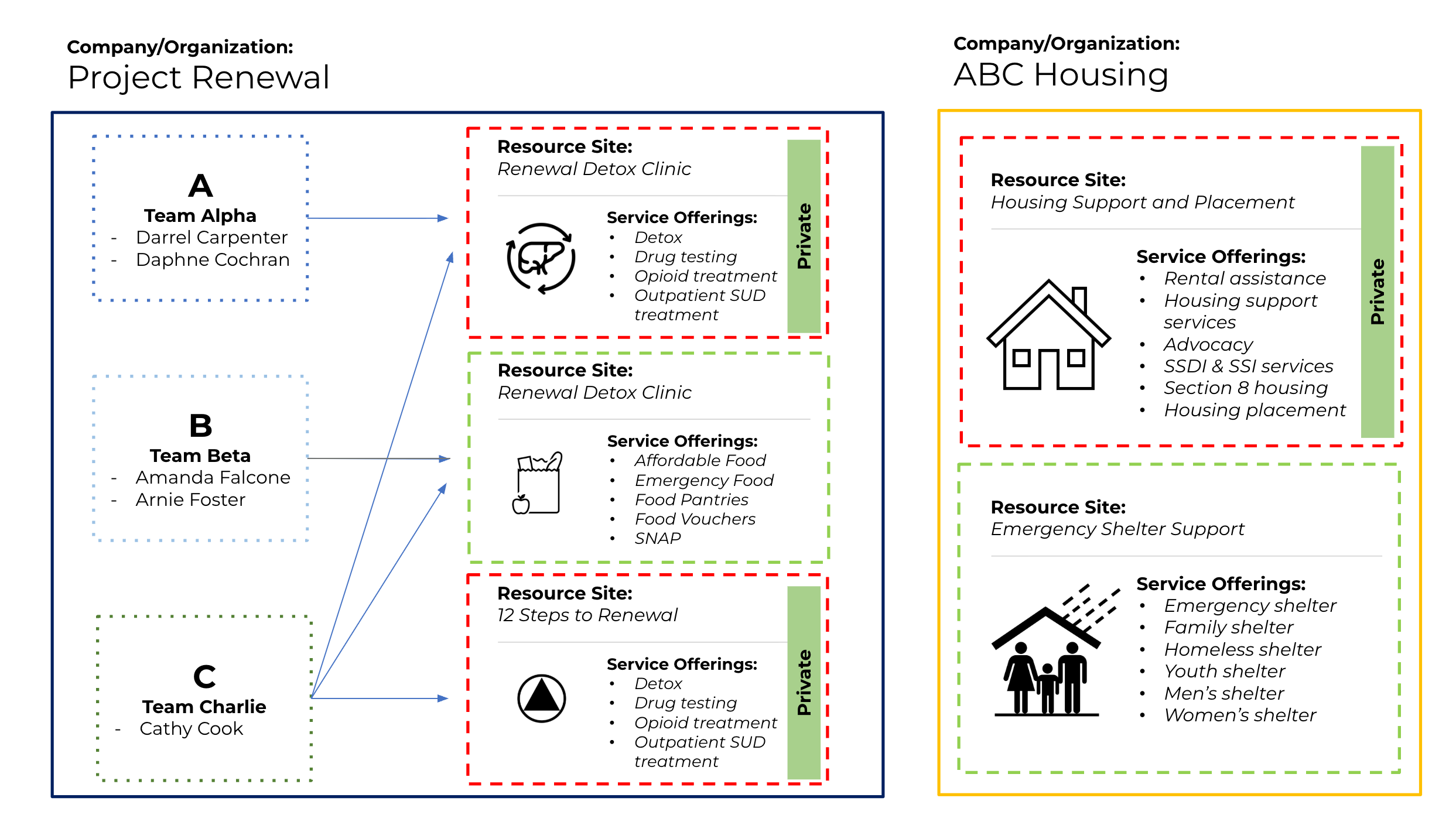
Redesigning Data Privacy & CBO Network Architecture

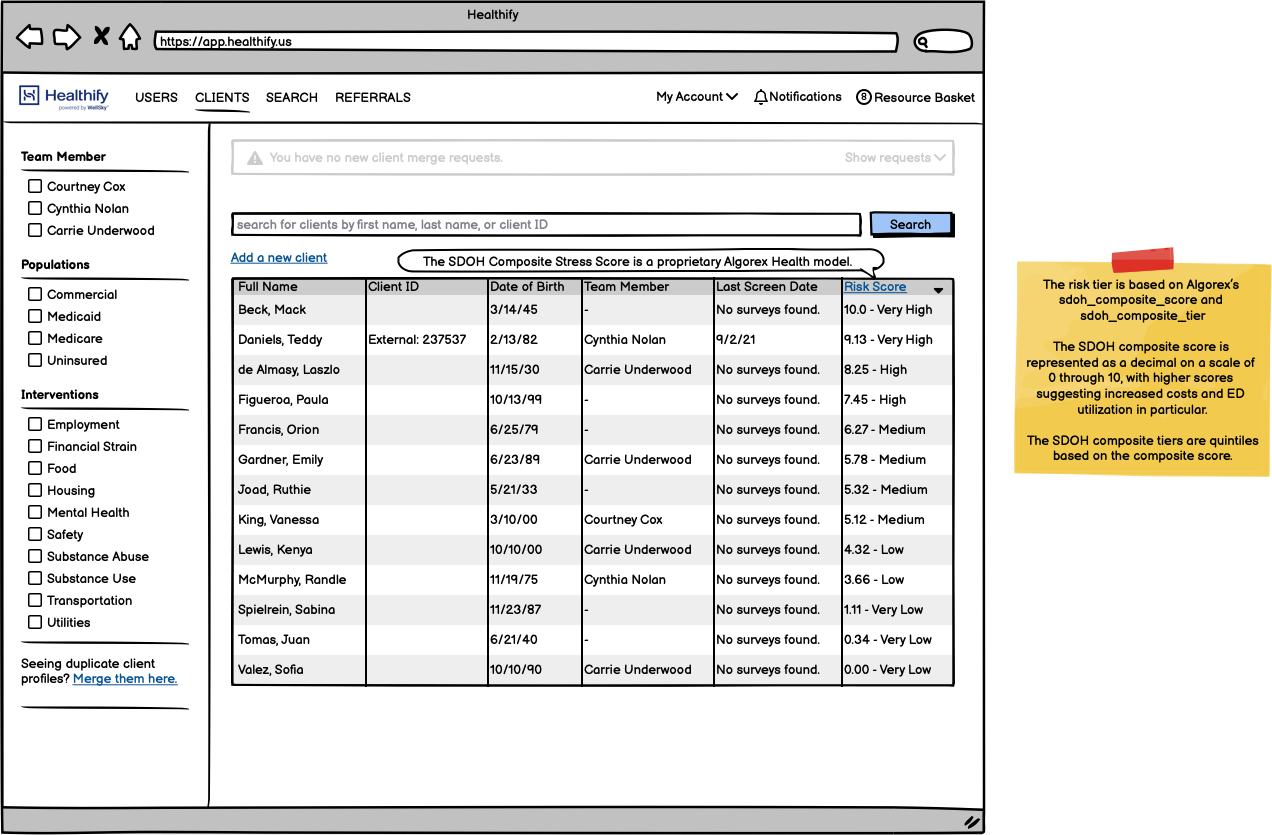
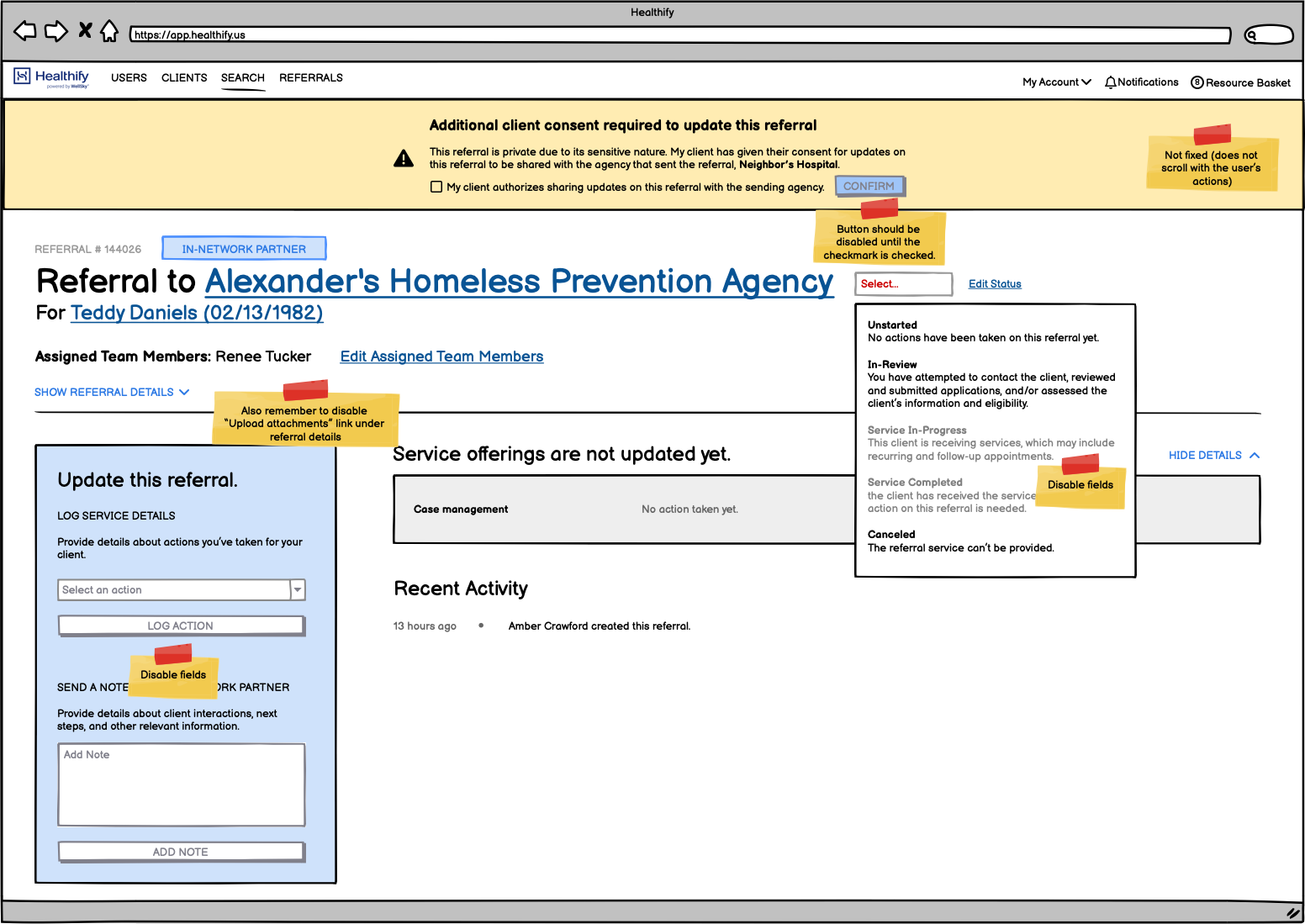
ProblemBuild technology to support community based organizations serving vulnerable populations

Healthify's referral network connected patients to community-based organizations for social needs - but the data sharing model created legal, ethical, and CBO recruitment challenges. This project revamped the permissions architecture to make data handling more transparent, compliant, and client-centered.

View the Full Case Study
  • Privacy ArchitectureRevamped the permissions model so client data is shared in accordance with legal requirements and ethical standards - eliminating the "gotcha" moment where customers were surprised by data sharing scope at implementation.
  • CBO Network GrowthSome CBOs had opted out of the platform entirely due to data sharing concerns. Improved privacy architecture unlocks those organizations and expands network recruitment potential.
  • Client-Centered ReferralsRedesigned the referral model to put client needs first - reducing the burden on vulnerable individuals to navigate between referral senders and recipients.
  • Compliance + TrustAddressed both legal obligations and ethical responsibilities around client data, increasing user and customer confidence in the Healthify platform and participation model.

Business Impact

$3.5M+ Annual revenue under management
~20% Of the Medicaid population reached via behavioral health expansion
$75B Behavioral health treatment market unlocked

Why Build It

  • Ethical obligation The clients Healthify serves are vulnerable. Their data deserves to be handled responsibly and with appropriate consent.
  • Legal obligation Platform data sharing practices needed to align with legal requirements governing how client data is shared across organizations.
  • CBO recruitment CBOs that previously opted out due to data concerns become recruitable with a stronger privacy model.
  • Customer confidence Eliminated the implementation reveal - where customers discovered just how much data was shared in the network - which not infrequently went poorly.
Healthify CBO assignment architecture diagram

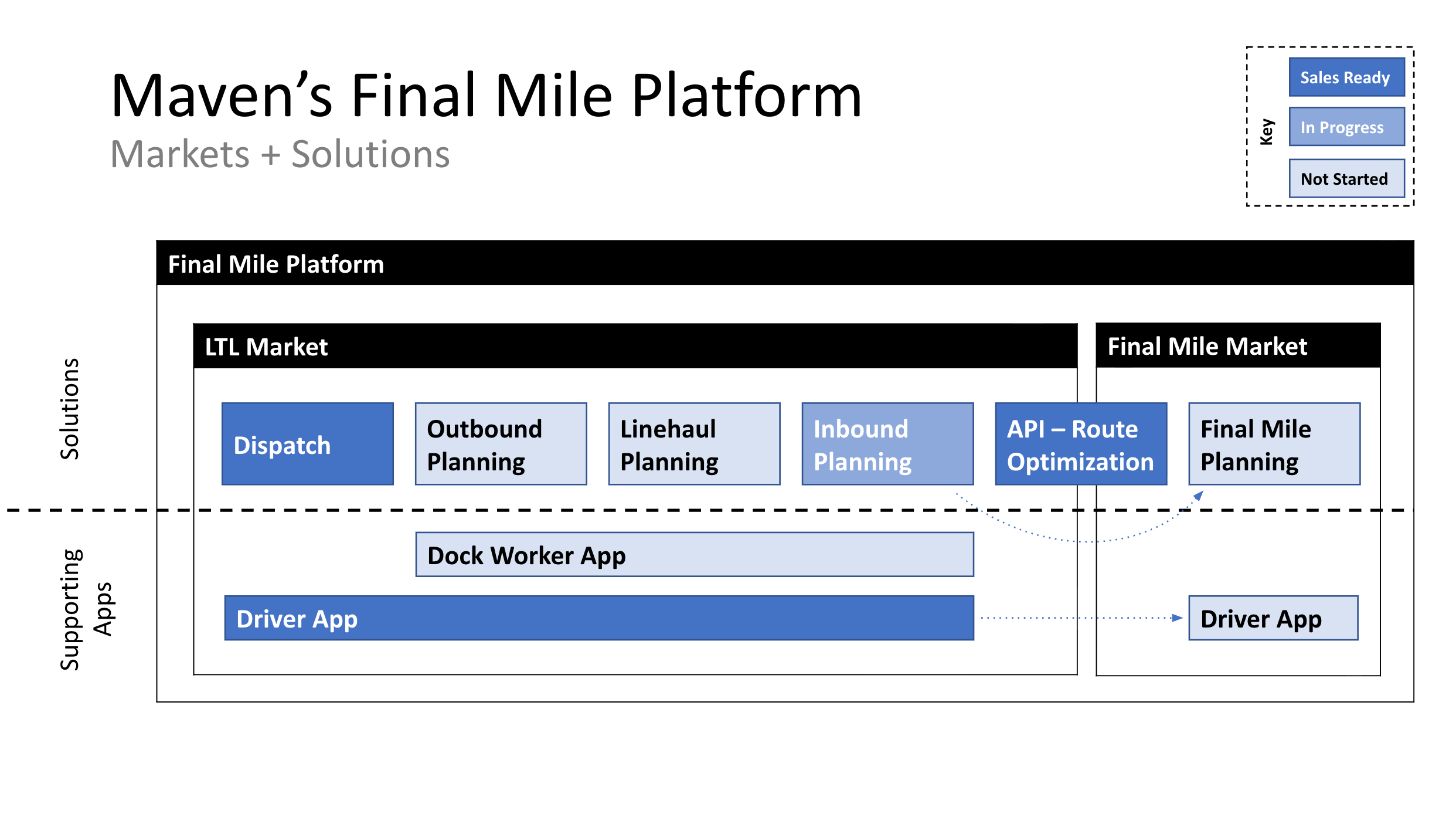
Final Mile Platform Portfolio Strategy & Roadmap

ProblemDefine a product portfolio strategy for last mile logistics across pickup and delivery

Maven Machines had a growing set of logistics products spanning two distinct markets. This project defined a cohesive portfolio strategy across LTL and Final Mile delivery, balancing competing resource demands and sequencing investments to seize market opportunity.

View the Full Case Study
  • Portfolio ArchitectureDefined product strategy across two markets: LTL (Dispatch, Outbound/Linehaul/Inbound Planning) and Final Mile (Route Optimization, Final Mile Planning), with shared supporting mobile apps.
  • Roadmap PrioritizationBalanced competing resource demands across a multi-product portfolio - sequencing from Sales Ready through In Progress using structured prioritization, market research, and stakeholder alignment.
  • Market ExpansionIdentified Final Mile as an adjacent growth opportunity from the established LTL base, with API-first route optimization as the strategic bridge between the two markets.
  • Supporting ProductsCoordinated the Driver App and Dock Worker App across both market segments to ensure cohesive, end-to-end platform coverage without duplicating engineering effort.

Business Impact

3K+ Vehicles on the platform
50%+ Reduction in customer costs via route optimization APIs
$1.5M Annual revenue

Platform Scope

Two-market product portfolio:

  • LTL Market Dispatch · Outbound Planning · Linehaul Planning · Inbound Planning
  • Final Mile Market API Route Optimization · Final Mile Planning
  • Supporting Apps Driver App (both markets) · Dock Worker App (LTL)
Maven Machines Final Mile Platform architecture diagram

Diagnosing & Reversing Premium Subscriber Decline

ProblemNet loss of premium subscribers over the last 12 months

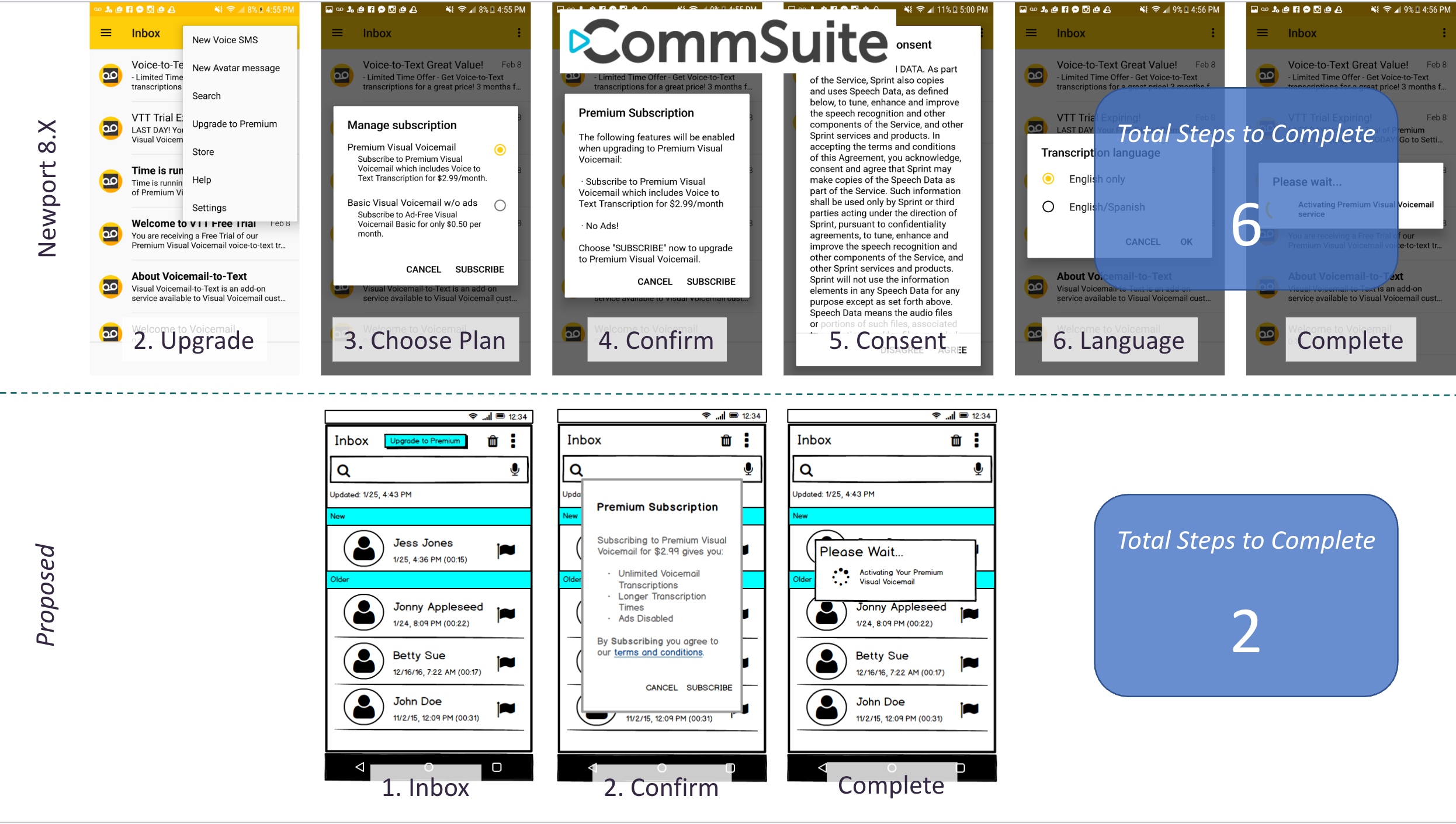
Facing sustained premium subscriber decline, I led a structured analysis of conversion funnel changes across product versions. The investigation surfaced a strong correlation between specific workflow changes and negative conversion trends - providing a clear, evidence-backed path to reversing the decline.

View the Full Case Study
  • Root Cause AnalysisIdentified strong correlation between VVM changes and negative conversion trends specifically the removal of "Upgrade to Premium" in Middlesex 7.x and the addition of 2 extra steps to complete purchase across Middlesex 7.x and Newport 8.x.
  • Purchase Workflow OverhaulTop priority recommendation: simplify and improve the purchase workflow before any pricing changes. Agile implementation enables real-time measurement and iteration on each change.
  • Price Sensitivity TestingA/B test to optimize product offering mix. Apply pricing psychology principles to simplify choice and guide decision-making at the Choose Plan step.
  • Evidence-First SequencingStrong evidence points to workflow friction - not price - as the primary driver of lost conversions. Fix the funnel first; test pricing second.

Business Impact

17M Active users on the platform
+8.6% Increase in paid-plan adoption
$324K Saved annually by cutting underperforming features

Key Findings

  • VVM Changes Drove Decline Correlation between specific version changes and the negative conversion trend was strong enough to prioritize workflow fixes above all else.
  • Friction Added at Critical Moment Removing the "Upgrade to Premium" CTA and adding 2 steps to purchase created unnecessary friction right at the conversion point.
  • Multiple Purchase Decisions - Newport 8.x Adding a purchase decision with multiple plans introduced choice overload, further suppressing conversions.
  • Pricing Changes Secondary A/B price testing is recommended, but only after workflow improvements are in place and measurable.
Full Portfolio - PowerPoint Version Includes original mockup screenshots, brand assets, roadmaps, and more!
View in Google Slides

Rapid Prototyping with Generative AI

I use generative AI tools like Claude Code and Codex (ChatGPT) to rapidly prototype product ideas, gather early user feedback, and iterate quickly without significant UX or engineering investment. Some projects even include full CI/CD pipelines. Below are a few examples built around problems from my own life.

Personal Project
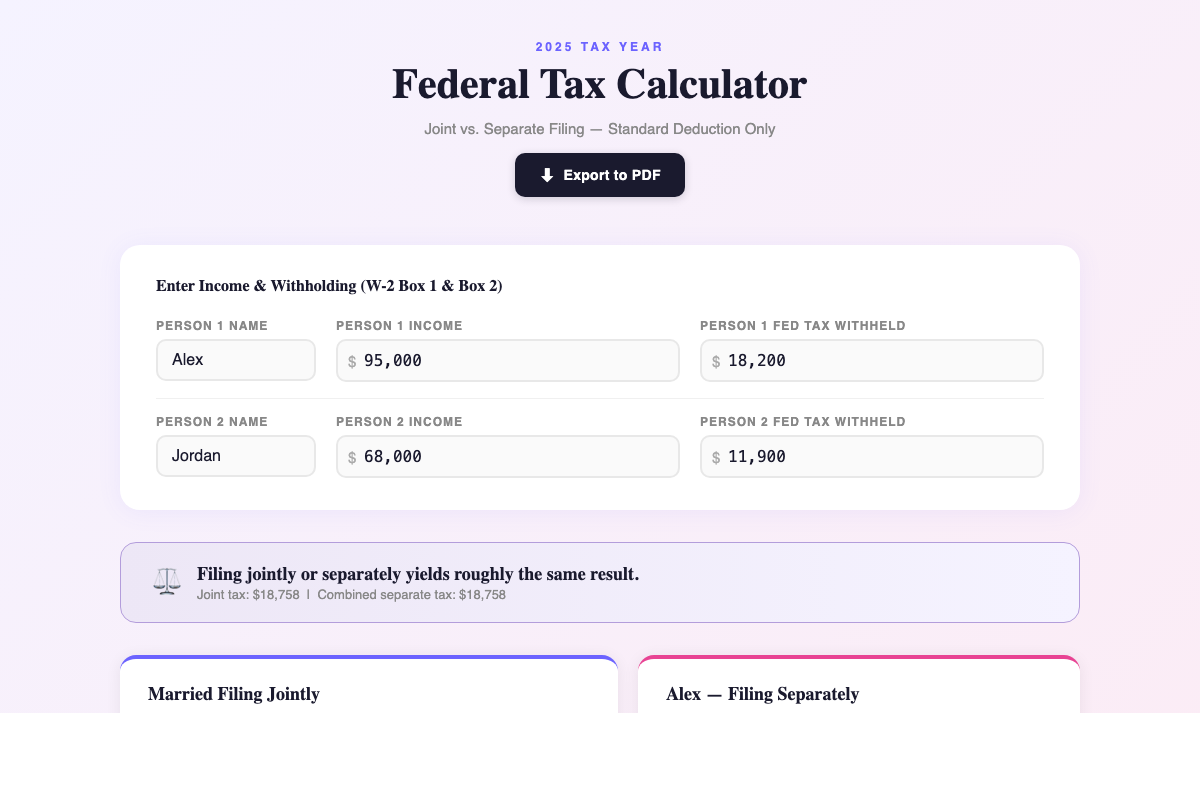
Tax Liability Calculator preview
Live App
Tax Liability Calculator
A simple tool for quickly evaluating a couple's tax position, estimating liability, withholdings, projected refund, effective tax rate, and whether filing jointly or separately is more advantageous.
Personal Project
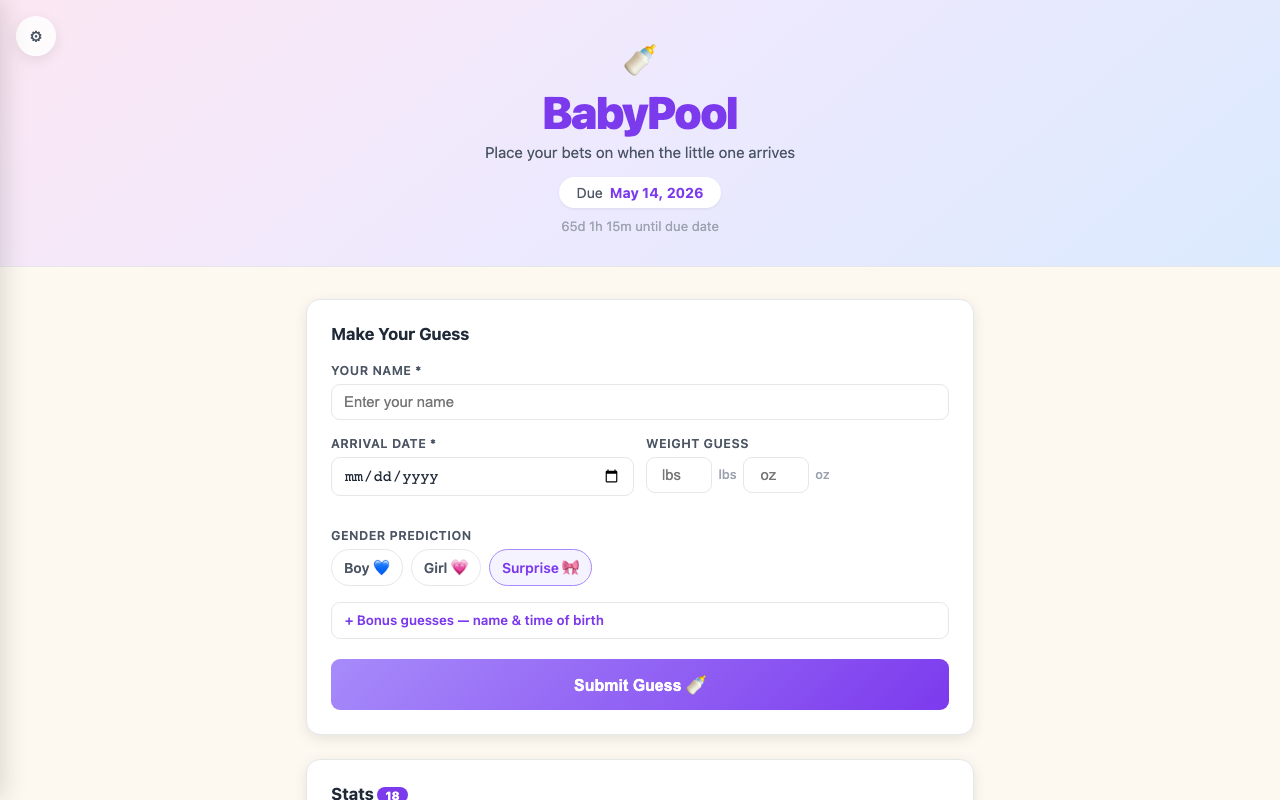
BabyPool preview
Live App
BabyPool
A quick AI-protoype of a playful baby arrival pool where friends and family can guess the birth date, predict the baby's name, and see who's closest when the big day arrives.

Leading Product Teams

I've been managing product people for the better part of a decade - PMs at every level, UX designers, technical writers, and product operations staff. The thing I care most about isn't shipping. It's building teams that think.

Trust-first. Direct. Accountable.

I extend autonomy early and pull back only when something gives me a reason to. And when something isn't working, I say so, specifically, concretely, quickly. Vague feedback is unkind. I try to build teams where candor runs in both directions.

Strategy belongs to everyone on the team.

The habit I most try to break in PMs is feature thinking, the idea that product work is fundamentally a list of things to build. We start with the problem, the user, and the number we're trying to move. No roadmap conversation starts with a solution.

Metrics aren't a reporting exercise. They're how we think.

Every PM I manage owns the key metrics for their product area fluently, not just monitors them. That's what performance looks like to me. Not features shipped. Are we moving the numbers that matter, and do we understand why?

Modern craft matters.

I push teams to prototype and pressure-test ideas fast, increasingly with AI tools, before pulling in design or engineering. It builds product thinking quickly and keeps early ideas cheap to kill.

Who I've Led

PMs (intern → senior) · UX Designers · Technical Writers · Product Operations

Hi, I'm Jess!

Jess Poeske

I’ve spent 15 years building products in complex industries, helping early ideas grow into real companies. I’m especially drawn to healthcare challenges where better systems improve patients’ lives while letting technology fade into the background. Along the way I’ve been part of three startup exits and would love to make your company number four.

Outside of product work, I’m active in Pittsburgh’s startup and arts communities and enjoy experimenting with new ideas and tools.

Product Philosophy

  • Customer and data first. Every decision anchored in user evidence and measurable outcomes, not opinions.

  • Frameworks are tools, not rules. The right framework depends on product maturity, business type, and context. No silver bullets.

  • Complexity is not the enemy. Some problems are hard. I lean into that complexity and build teams and systems that thrive in it.

  • Mission matters. I do my best work when the product I'm building has the potential to genuinely improve peoples' lives.

Recognition
Pittsburgh 30 Under 30 class of 2021
Passion
Opera singer + Former PFO board member
Hobbies
Gardening, running, audiobooks
Location
Pittsburgh, PA

Let's build something that matters.

Open to product leadership roles in healthtech, AI-driven platforms, and mission-driven organizations.

| linkedin | download my cv